
Federal Inmate Release Record Scope
No federal prison was identified in Franklin County. The nationwide Federal Bureau of Prisons remains relevant because a person connected to a Franklin County case may later enter federal custody, and a federal defendant may be held temporarily in a local jail under another agency’s authority. The agency exercising the custody owns the relevant status record. A local booking entry cannot establish completion of a federal sentence.
The BOP Inmate Locator covers federal inmates released after 1982 and is updated daily. It can return a current facility, a release status, or a date. Earlier federal records require the National Archives route identified by BOP. A federal court docket may be needed when the person was released before trial and never acquired a completed BOP sentence record.
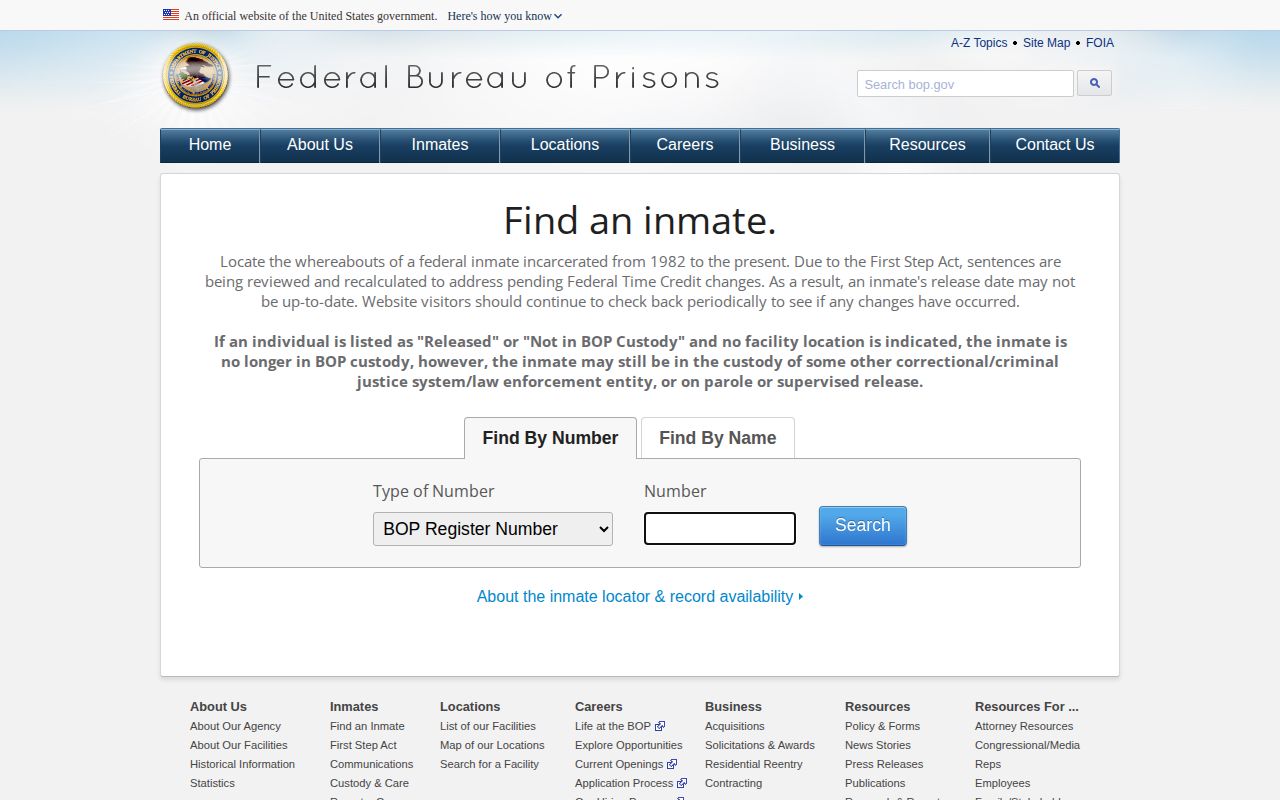
The locator’s number and name fields help distinguish people with similar names, but the result still speaks only to BOP custody.
Search Federal Inmate Release Records
BOP permits a number search using a BOP register, DCDC, FBI, or INS number. A name search can also use age, race, and sex filters. Use the strongest known identifier, then match the full returned information before treating a record as the correct person. Do not connect a result to Franklin County on name alone.
- Open the official locator and choose number or name search.
- Enter the register or agency number when known. Otherwise use the full legal name and available filters.
- Compare the returned name, register number, age, and other displayed identifiers.
- Read the location and release-date fields together. Record the exact wording.
- If the result says released, confirm the past date and remember that other custody or supervision may still exist.
- If no BOP sentence record resolves a federal pretrial event, check the federal court docket and the relevant U.S. Marshals district contact.
The Franklin County released inmate search shows when to switch between county, Missouri DOC, BOP, and ICE systems.
A daily locator update may not mirror a court order at the moment it is entered. For a recent event, compare the BOP result with the federal docket. A judgment sets the sentence, while a later order may affect detention or release. If the person appears at a BOP institution, confinement continues. If the locator shows a past released date, that is direct public evidence about BOP custody, yet any period of court-supervised release must be checked in the federal case rather than inferred from the Bureau field.
Federal Release Status Labels
A location of “RELEASED,” or a past release date shown without a facility, supports the conclusion that BOP custody ended. “Not in BOP custody” has the same narrow boundary. A future date is projected and can change. “UNKNOWN” means the term is not determined. “IN TRANSIT” indicates movement, not community release. Community Corrections Management can reflect federal community-corrections administration and does not by itself prove sentence completion.
| BOP display | Careful interpretation | Next step |
|---|---|---|
| RELEASED with past date | BOP custody ended on the displayed record | Check court or supervision if needed |
| Future release date | Projected federal date | Recheck near the event |
| IN TRANSIT | Federal movement continues | Do not call it release |
| UNKNOWN | Term is not determined | Use court or BOP records |
| Community Corrections | Community-based BOP administration may continue | Read status and sentence carefully |
A status must be stated in agency terms. Avoid turning a federal release date into a claim about Missouri charges, county detention, immigration custody, or any period of supervised release imposed by the federal court.
Request Federal Inmate Release Records
The locator is a summary tool. For a fuller agency record, use BOP’s Freedom of Information Act route. Identify the person with the register number and full name, describe the specific custody or release record sought, and give a date range. A narrow request for an existing record is easier to route than a request asking the agency to reconstruct a life history.
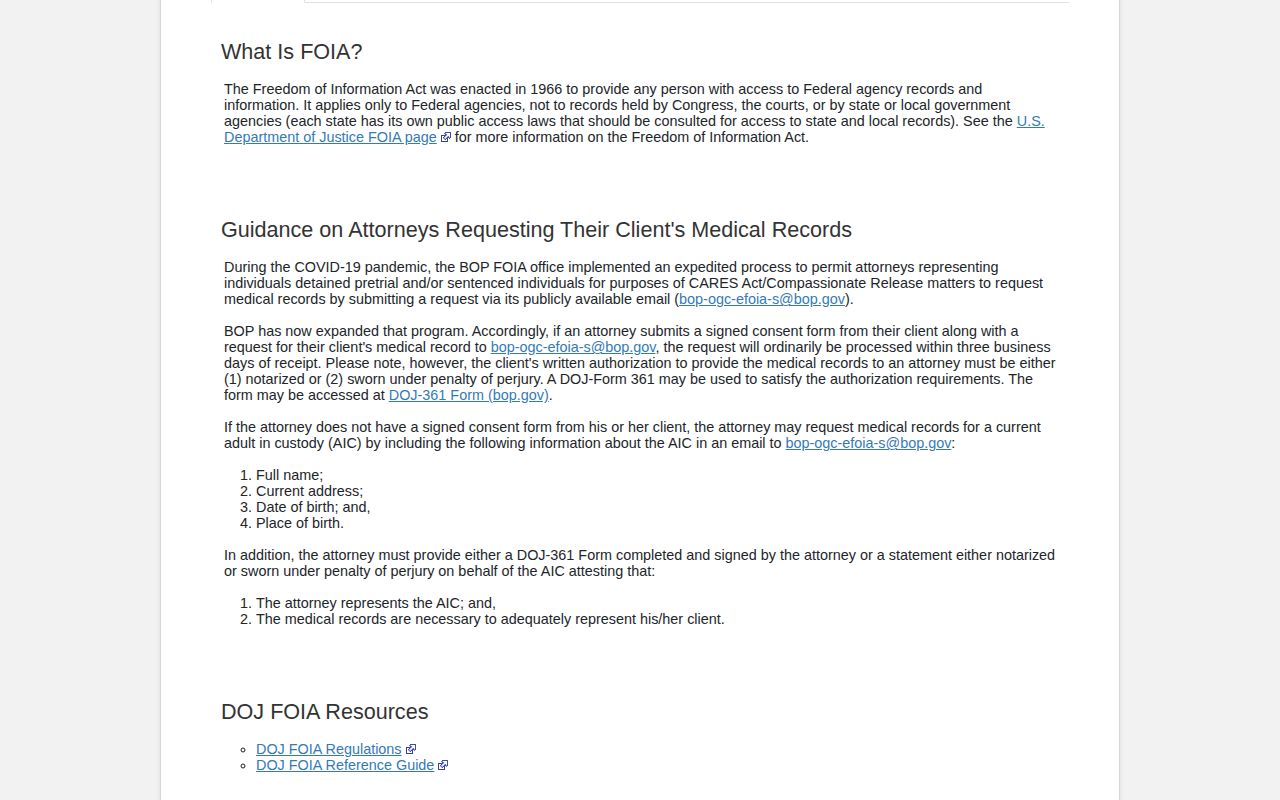
The federal request channel is the correct fallback for BOP documents; Franklin County cannot create or certify them.
Federal Bureau of Prisons Records
Public lookup: BOP Inmate Locator
Agency records: BOP FOIA
Coverage: federal inmates released after 1982 in the locator
Older records: National Archives route described by BOP
For a federal court release order, use the federal court clerk or PACER docket. For pretrial prisoner movement, the U.S. Marshals Service may be the custody agency. USMS has no nationwide public historical released-prisoner list comparable to BOP, so the court order and agency record carry more weight for that event.
For older federal inmates, follow the National Archives instructions BOP provides rather than forcing a pre-1982 name into the current locator. A well-scoped records request should distinguish sentence records, institutional movement, release information, and court documents. Include a register number when available and avoid sending state or county record questions to BOP. When some material is restricted, ask for the portions that can be released and for an explanation of the withholding authority.
Franklin County Federal Custody Changes
A federal detainee may be temporarily housed in a county jail without becoming a county-sentenced inmate. Franklin County’s custody entry can establish when the person entered or left its building. It does not establish whether the U.S. Marshals Service moved the person elsewhere, whether a federal court ordered release, or whether BOP later received the person after sentencing. Follow the record owner at each stage.
If Franklin County says the person departed to a federal agency, request the receiving-agency or transfer field if maintained and public. A subsequent BOP institutional result confirms continued federal confinement. An “IN TRANSIT” label also describes movement. If the person was a federal pretrial detainee, look for a release or detention order in the federal docket and seek USMS confirmation as appropriate.
- USMS
- The U.S. Marshals Service manages federal pretrial custody and prisoner movement.
- BOP
- The Bureau of Prisons manages sentenced federal custody and its public locator.
- Federal release
- The end of the identified federal custody, not an automatic end to every other legal status.
Federal Release Versus Agency Transfer
The Franklin County detention source documents municipal detainees and in-state and out-of-state extraditions. A person can therefore vanish from county custody because another agency took over. That fact is especially important in a federal inquiry. The county exit, USMS movement, BOP admission, and later BOP release are separate events owned by separate custodians.
Build the timeline from records. First, identify when county custody ended and the destination recorded by the Sheriff. Next, check the federal court for detention, transport, or release authority. Use the BOP locator after a sentenced person enters that system. A transfer to BOP is not community release, and a BOP release does not resolve an ICE hold or a state warrant.
Municipal detention and extradition work in Franklin County make this chain more than a theoretical concern. The arresting agency, holding jail, transporting agency, sentencing court, and prison system can all differ. A county record may say the person left to USMS. The federal docket may show detention pending trial. BOP may later show an institution after sentencing. Each source establishes one step, so a complete release account should state where custody began, who received it, and which agency finally recorded release.
Note: The most reliable federal release conclusion names both the agency whose custody ended and the exact date or status that agency recorded.
Federal Inmate Release Record Limits
The BOP locator is unusually useful for historical release because it can affirmatively show released status for covered records. Still, it is not a universal federal custody ledger. It begins with post-1982 releases, does not replace a court docket, and does not provide a public USMS release archive. Spelling or identity errors can also defeat a name search.
A release date may change while still projected. The result can lag the legal event until the daily update. Community corrections can remain part of BOP administration even when the person is no longer at a prison. Federal supervised release is imposed and monitored through the court system, so the end of BOP confinement is not necessarily the end of federal obligations.
Use a second source when the distinction matters. The federal judgment explains the sentence. A release order explains pretrial liberty. The BOP record explains Bureau custody. The county entry explains only the Franklin County portion of the chain. Keeping those roles separate prevents a transfer or status update from being overstated.
ICE custody needs its own check. A person released by BOP can move to immigration detention, and a federal criminal case can end while civil immigration custody continues. Conversely, a person absent from the ICE locator may still have a BOP record. Search the ICE locator with its accepted identifiers and contact the relevant ERO field office when needed. Do not use one federal agency’s no-result to reach a conclusion about the other.